Test-lab platform for decoration (print) testing — requests, scheduling across two labs, per-color results, versioned PDF reports, billing export, client portal, and a built-in AI agent on Next.js, Drizzle, and PostgreSQL.
Project Overview
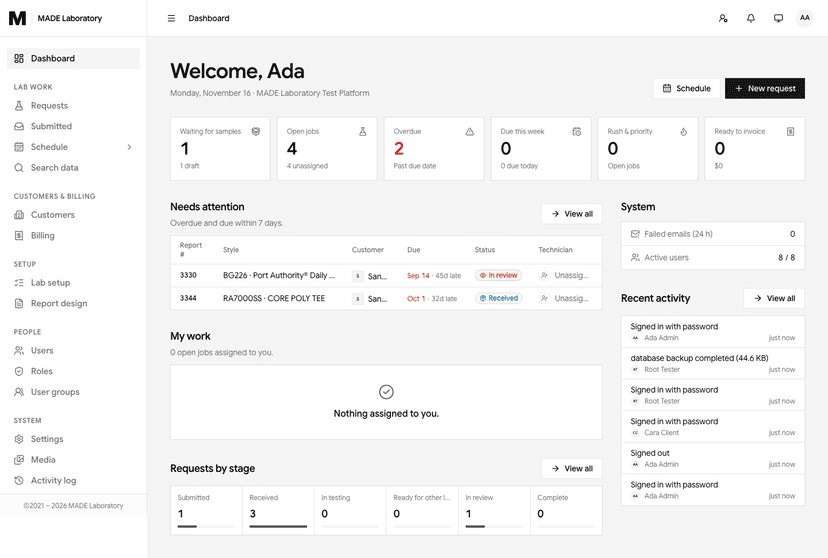
Lab Software is the internal platform a decoration test laboratory uses to run print-durability test jobs for apparel brands: a customer requests a test, the lab schedules it, technicians record results for every fabric color, a PDF report is issued, and the job is invoiced.
Before the platform, every job was typed into four or five places — email, a task board, a billing spreadsheet, a slide deck for the report, and the accounting system. The goal was simple: enter each job once.
Request → Samples received → Scheduled → Results per color → Review → PDF report → Invoice
Role & Delivery
Designed and built end to end as full-stack engineer and system architect — data model, access control, results editor, PDF pipeline, scheduling, client portal, AI agent, test suites, and production rollout on DigitalOcean with Cloudflare R2.
Core Capabilities
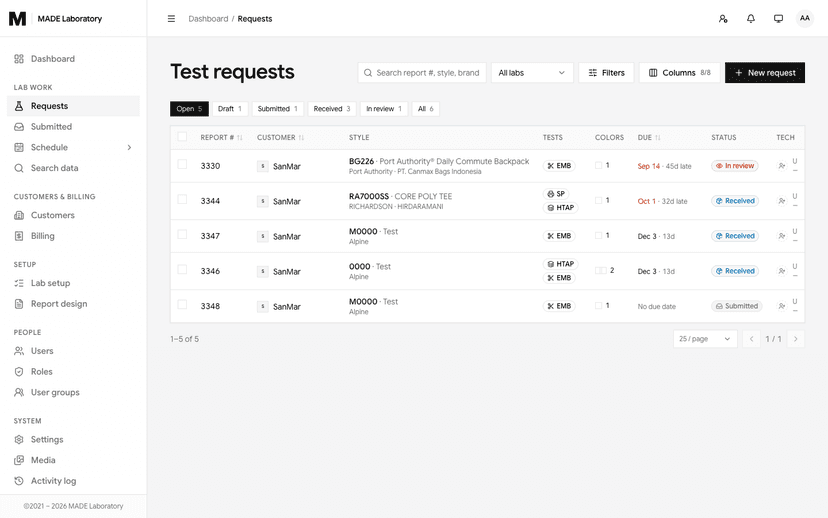
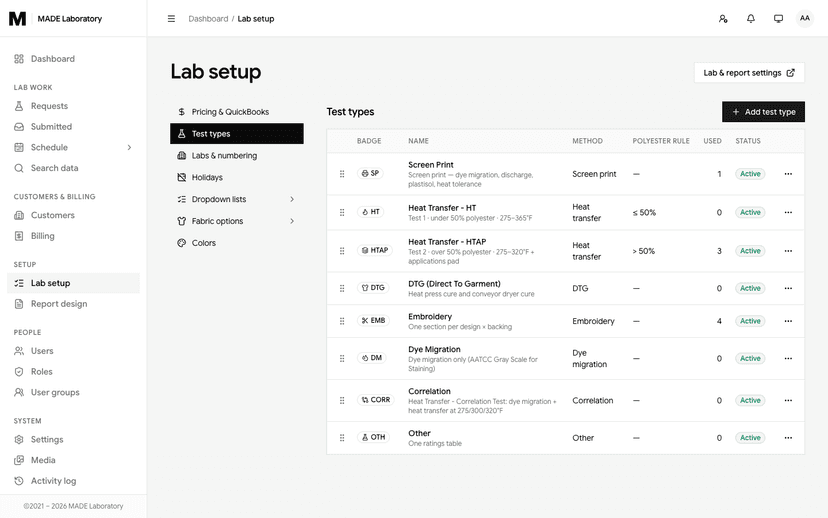
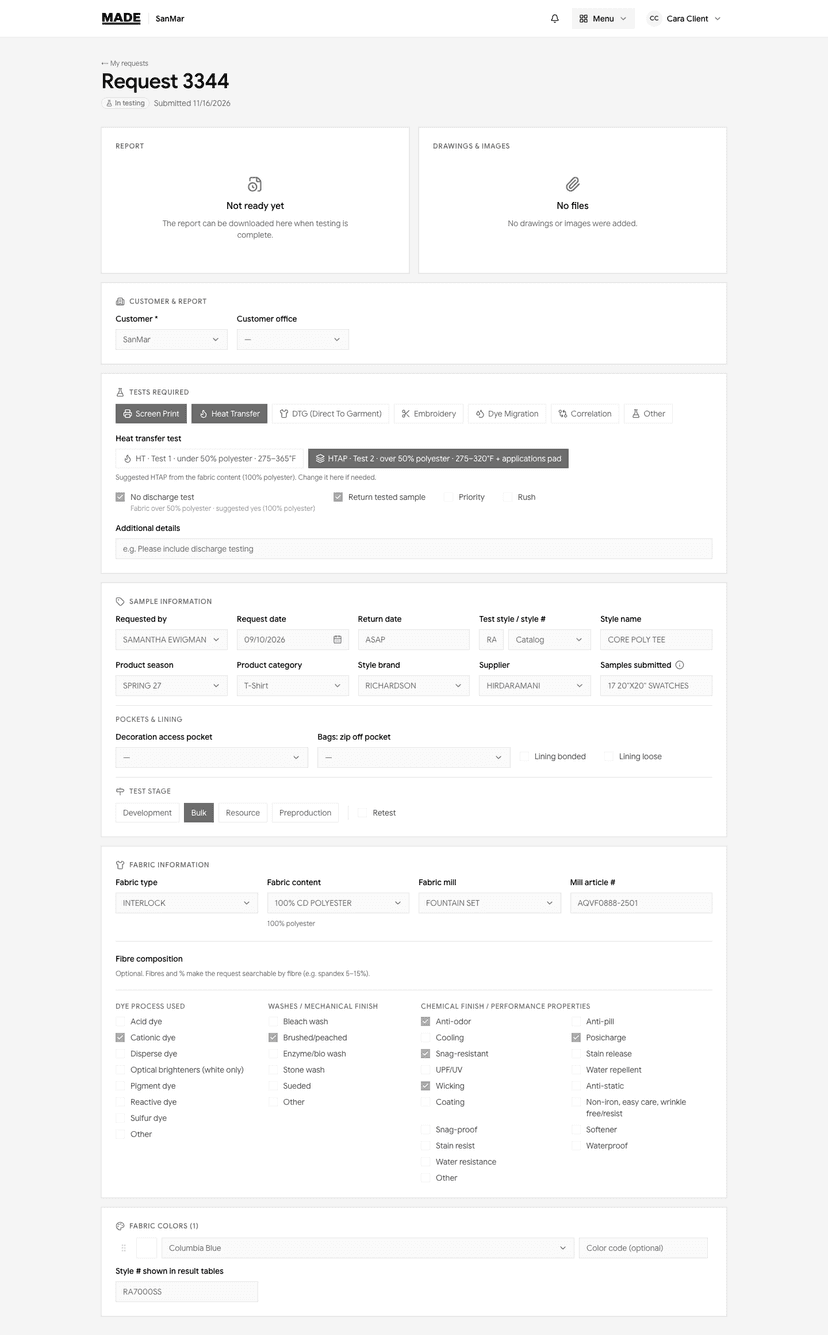
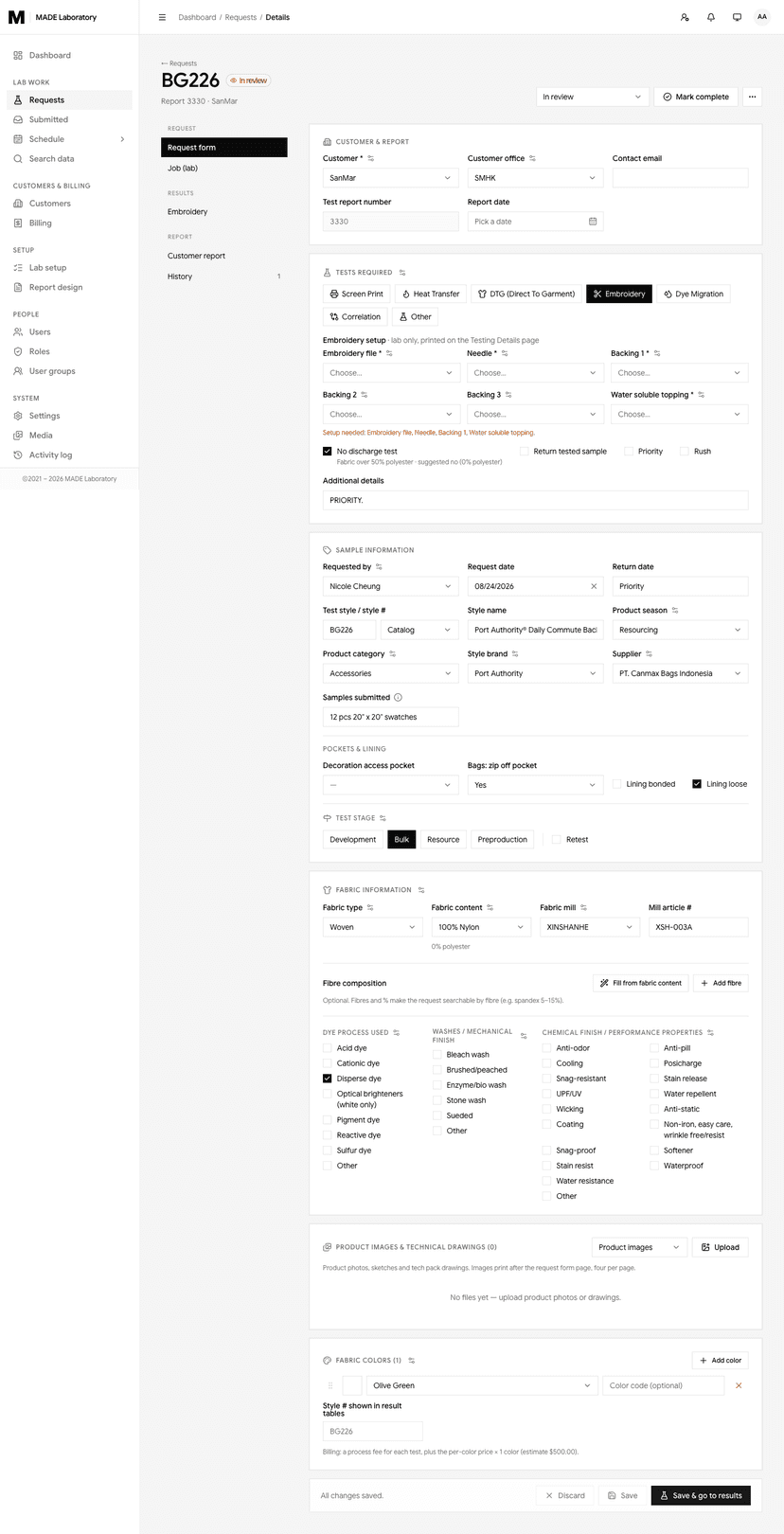
- Requests — One request = one report number = one PDF report. Sample, fabric and fibre-composition data, fabric colors with swatch / CMYK, and one or more tests (Screen Print, Heat Transfer, DTG, Embroidery, Dye Migration…). Drafts, submission, and sample receipt drive the due date from business-day turnaround rules (standard / priority / rush).
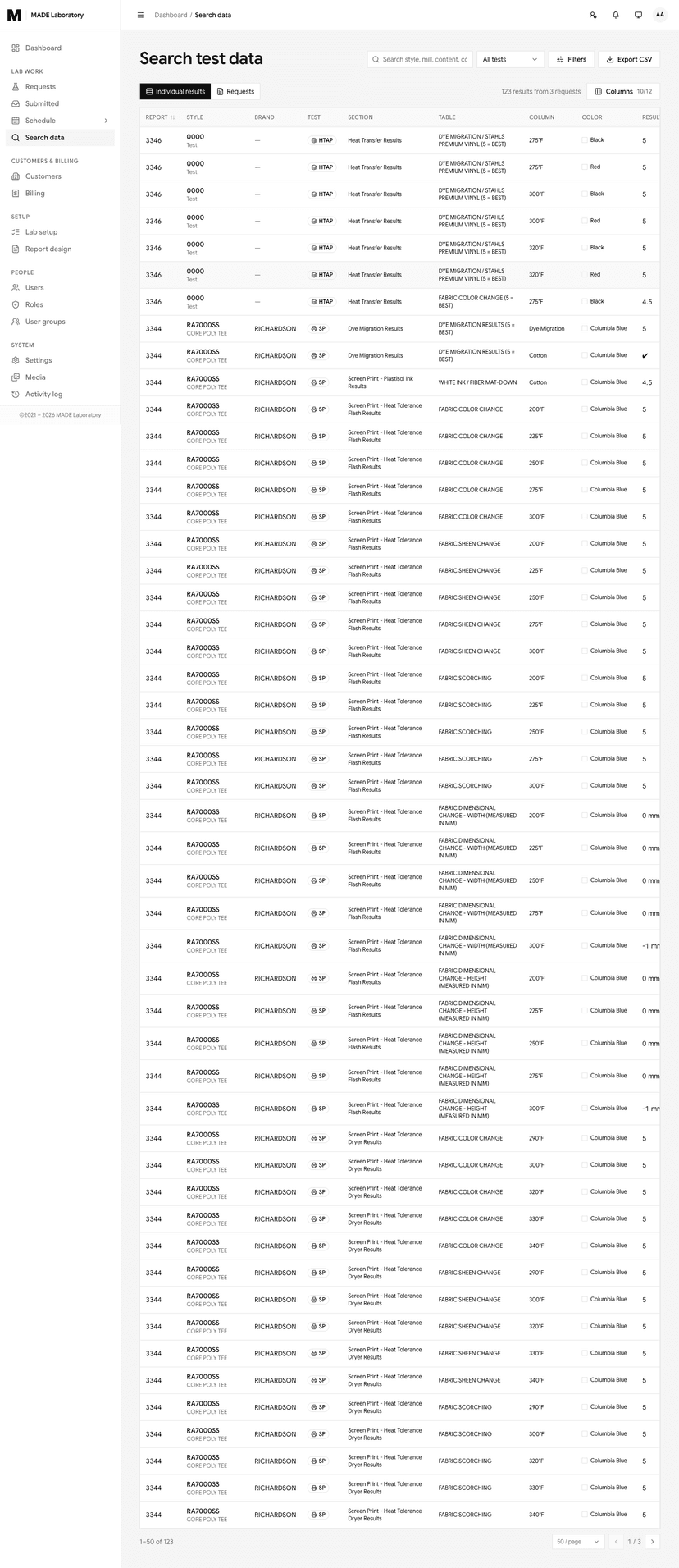
- Results editor — Each test copies its default layout (general or per-customer) into report pages → tables → columns. Every column × color is a searchable row: ratings in half steps, A/B/C grades, signed mm with automatic % change, red / red-star flags, row comments, and photos with in-app crop and rotate.
- Result-driven rules — Low ratings can add stock recommendations automatically, and poor dye-migration results suggest skipping the discharge section (and re-price the test).
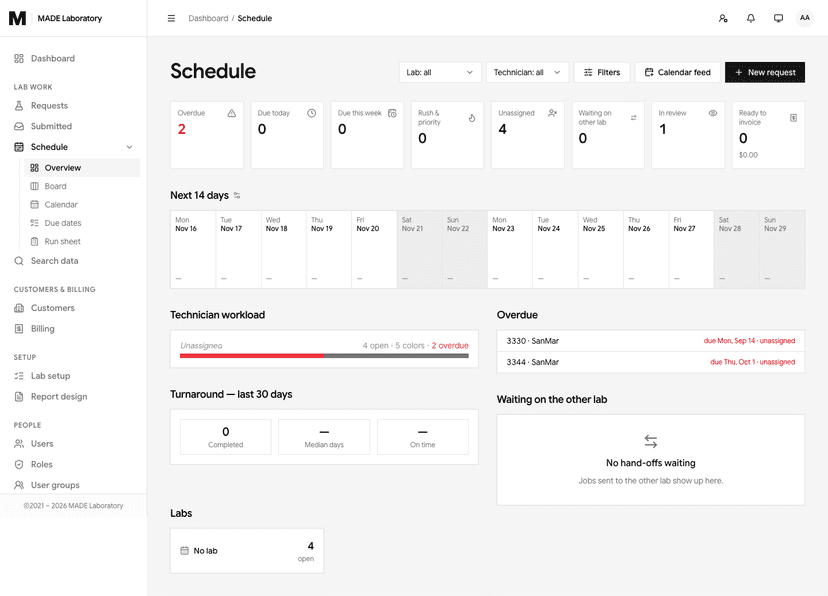
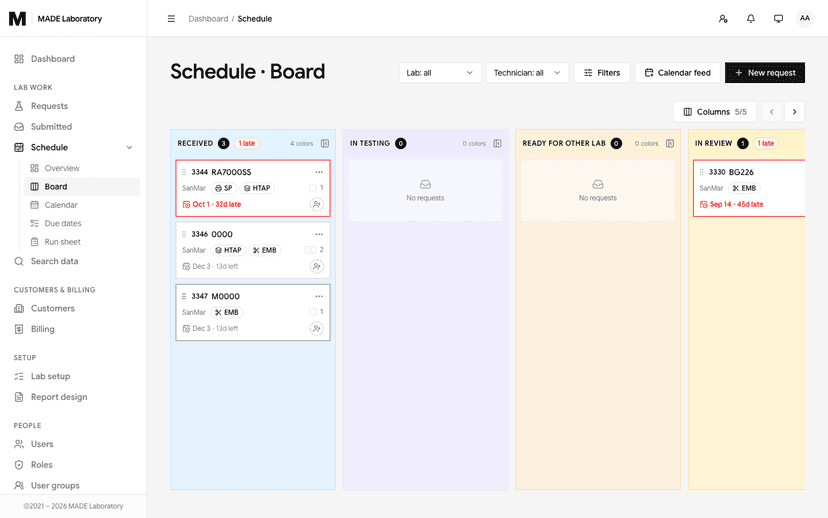
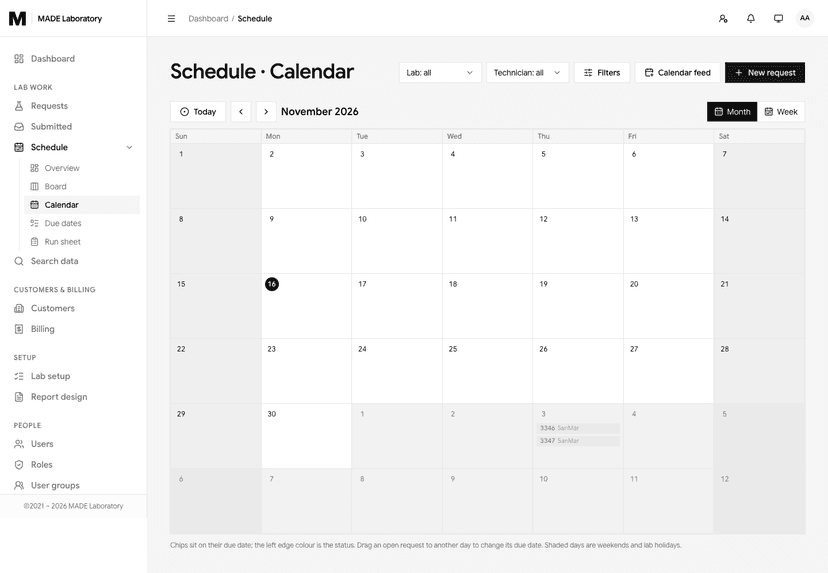
- Two labs, one queue — Schedule overview, kanban board, calendar, due-date groups and run sheets; drag a card to change status, hand work off to the other lab with a note. Optimistic locking prevents silent overwrites when both labs edit the same job.
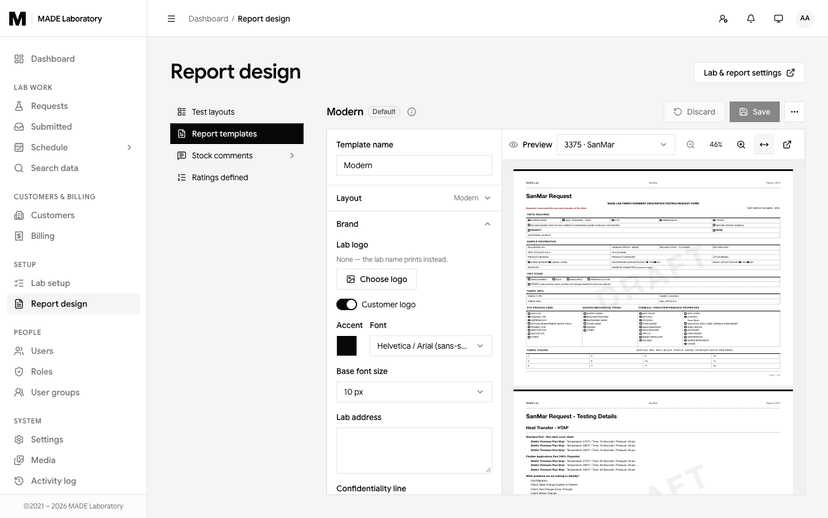
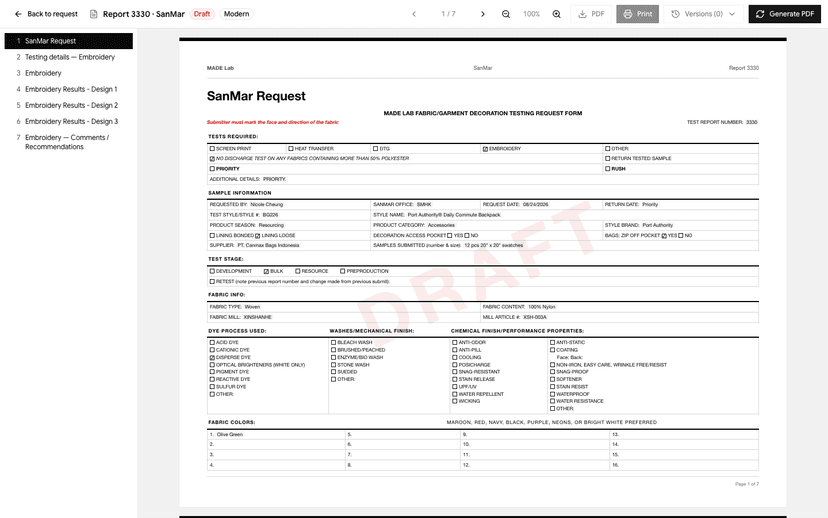
- Customer reports — Server-rendered PDFs (headless Chrome) stored privately in R2 with full version history, download links, and optional customer email.
- Search data — Query any individual result or request across tests, colors, fabrics and fibre %, with CSV export.
- Billing — Invoice lines derived from tests × colors × price lists plus fees; accounting CSV export today, API integration ready.
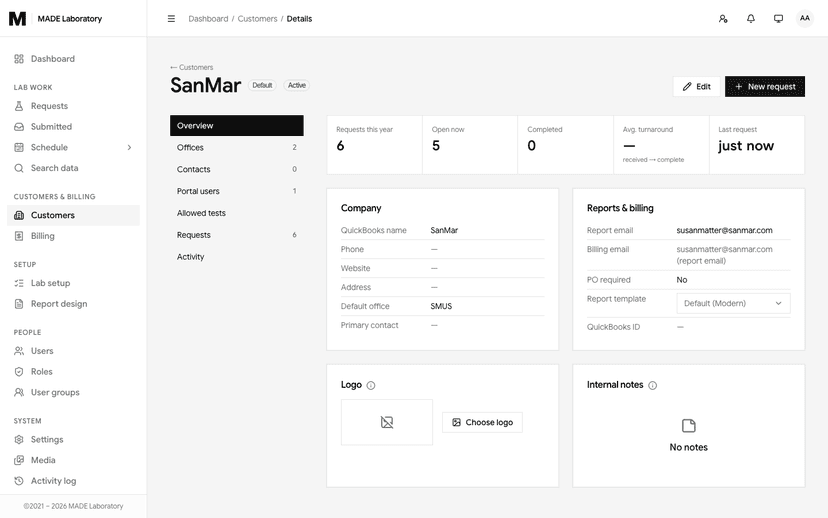
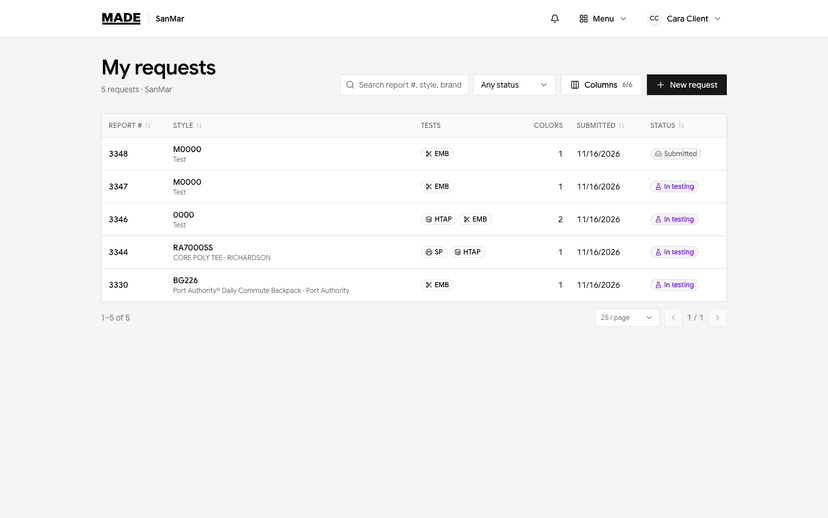
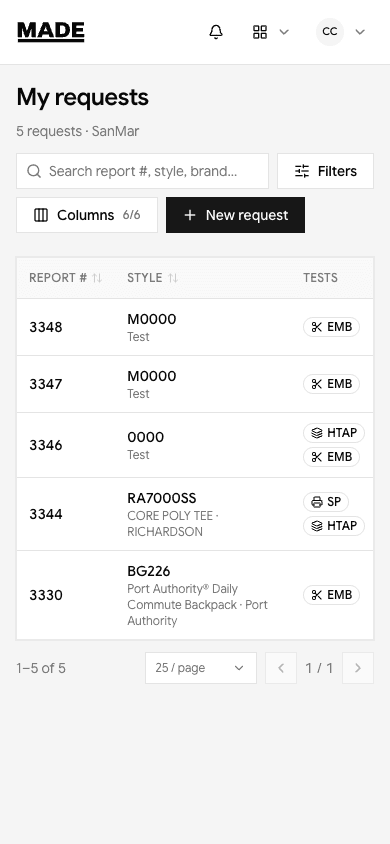
- Client portal — Customers submit requests, follow a simplified status (Submitted / In testing / Complete), and download finished reports — only for their own company.
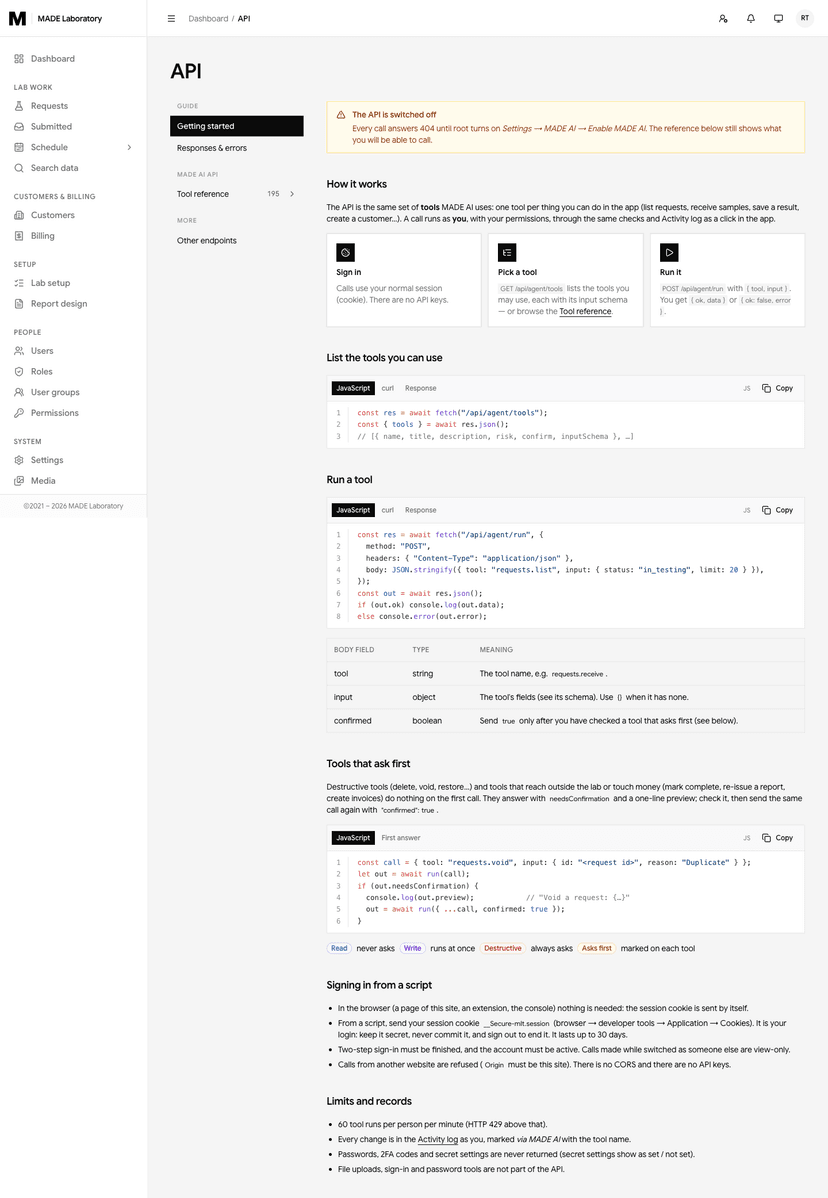
- Built-in AI agent — Every server action is exposed as a typed tool. Staff chat with the agent to do real work under their own permissions, with confirmation before risky steps and review / undo of each action. The same tool runner powers a documented HTTP API.
Foundation (Phase 1)
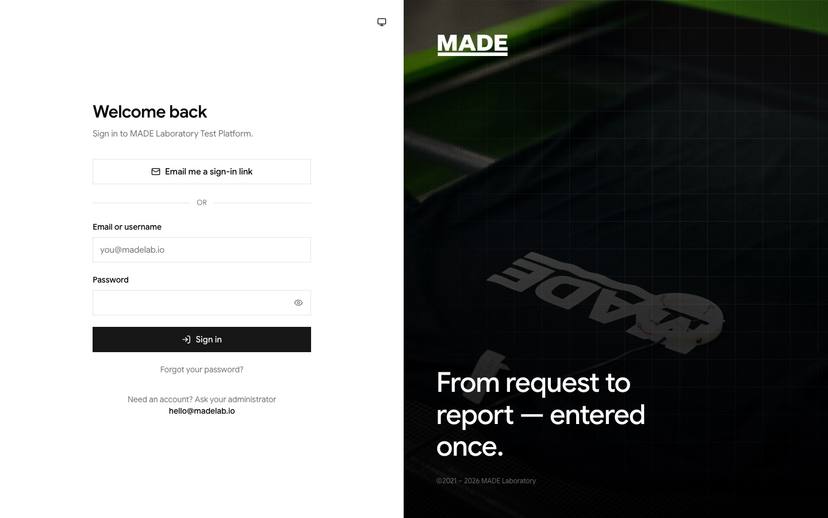
- Accounts — Email / username sign-in, Google sign-in for existing accounts, magic links, 2FA (authenticator or email code, backup codes), sessions, “switch account” view-as
- Access control — Users, roles, user groups, and a module × action permission matrix; root account; route and action guards
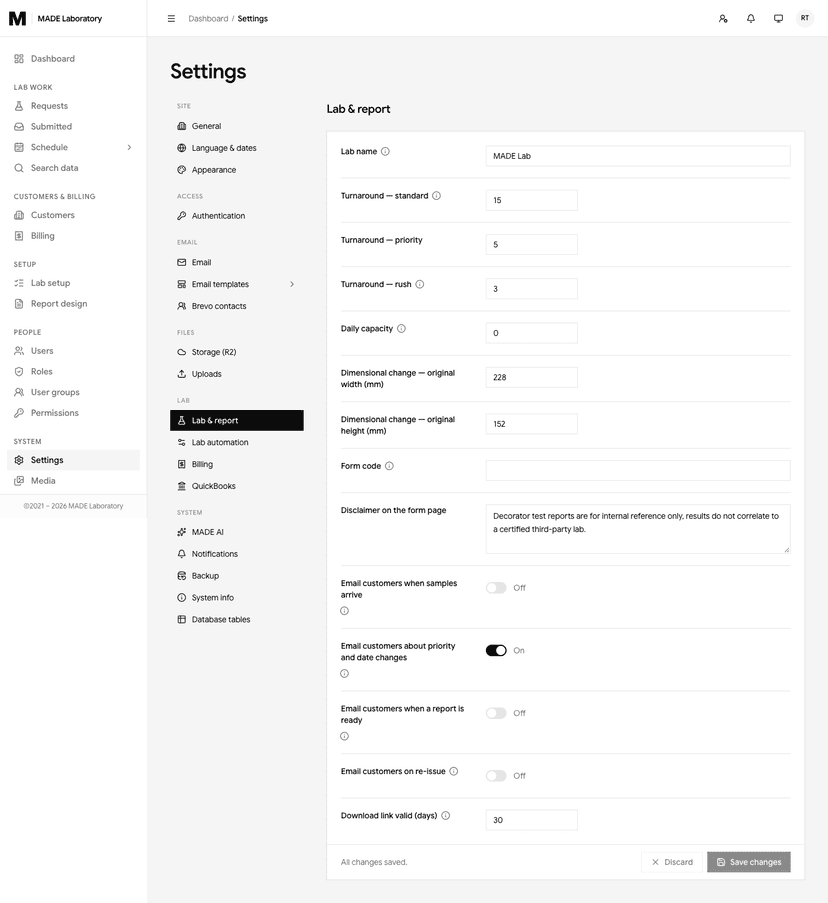
- Settings — General, lab rules, notifications, email (Brevo + SMTP fallback) with branded templates and logs, storage, uploads, appearance — secrets AES-256-GCM encrypted
- Media — Private-by-default R2 library with WebP optimisation and a picker
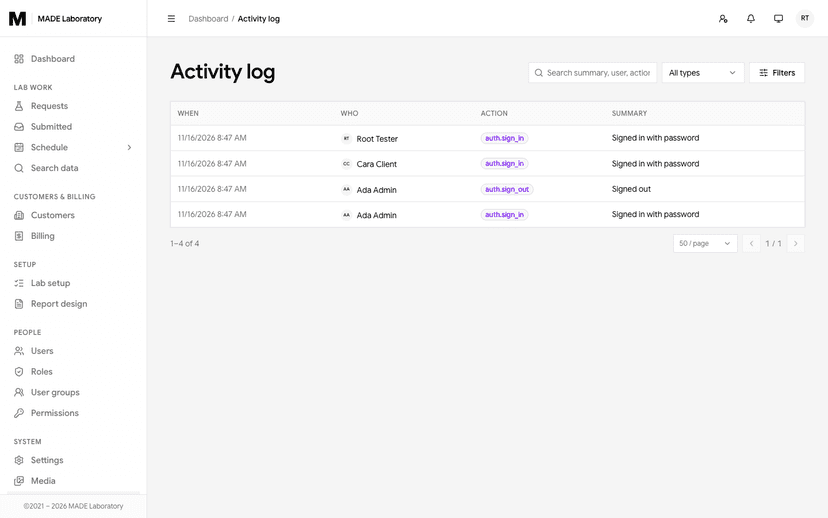
- Operations — Scheduled database / media backups to R2 with restore, versioned SQL migrations with an admin Migrate page, activity log, health and cron endpoints
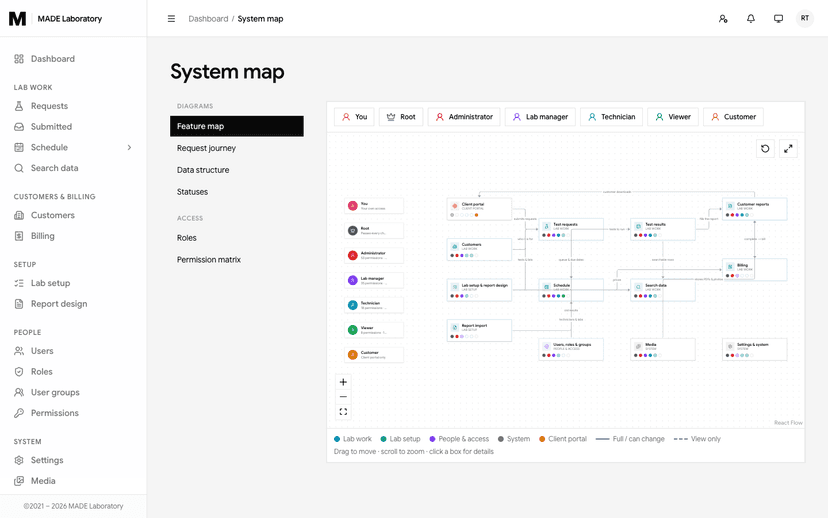
- System map — Interactive diagrams of features, request journey, data structure, statuses, and who may do what
Technology Stack
| Layer | Choices |
|---|
| App | Next.js 16 (App Router), React 19, TypeScript, Tailwind CSS v4, Radix UI |
| Data | PostgreSQL 18, Drizzle ORM + SQL migrations, zod v4 |
| Auth | Auth.js v5, TOTP 2FA, Google OAuth |
| Storage | Cloudflare R2 (S3 API), sharp |
| Email | Brevo transactional API, Nodemailer fallback |
| Documents | Headless Chrome PDF rendering, Plate rich text |
| Diagrams | React Flow (system map) |
| Quality | node:test unit + integration tests, Playwright E2E and screenshot suite |
Architecture Highlights
- Strict layering: server-component pages → server actions (
permission → zod → write → activity log → revalidate → result) → server-only reads - Lab results stored as relational rows, never JSON blobs — so search, export and reporting query them directly
- Docs-first workflow: every behaviour change updates its spec and changelog in the same change
- One code path for humans and AI: agent tools call the exact server actions the UI calls, and a test fails if any action lacks a tool
- Consistent admin kit (list controls, drawers, vertical tabs, rail panels) and every page verified at 375 px
Outcome
One system replaces the email → task board → spreadsheet → slides → accounting chain: a job is entered once and flows from request to invoice, with searchable results, versioned reports, a self-service portal for customers, and an AI assistant that can do the clicking.